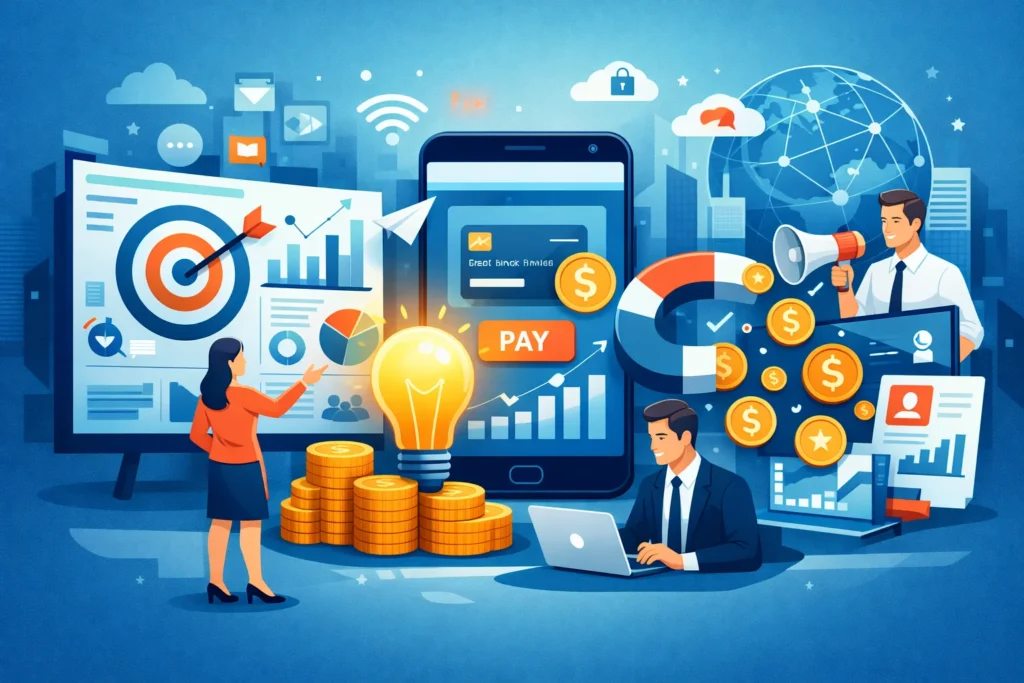
In the rapidly evolving world of financial technology, a robust fintech marketing strategy is no longer optional—it’s essential for survival and success. As we approach 2026, the fintech landscape is becoming increasingly competitive, with new players entering the market and established giants doubling down on innovation. This guide will walk you through the key components of a winning fintech marketing strategy, from foundational branding to advanced growth tactics, ensuring your company stands out in a crowded marketplace. Whether you’re a startup looking to make your mark or an established firm aiming to scale, understanding the nuances of fintech marketing can transform your business trajectory and drive sustainable growth.
A successful fintech marketing strategy for 2026 integrates SEO, content marketing, PR, and data-driven personalization to build trust, drive user acquisition, and foster long-term customer loyalty in a highly regulated and competitive industry.
Why Fintech Marketing Strategy Matters in 2026
The fintech sector is projected to grow exponentially, with global adoption rates soaring as consumers and businesses embrace digital financial solutions. However, this growth comes with challenges: increased regulation, heightened consumer expectations, and fierce competition. A well-crafted fintech marketing strategy helps you navigate these hurdles by establishing a strong brand presence, communicating value effectively, and building trust—a critical factor in financial services. Without a strategic approach, even the most innovative fintech products can struggle to gain traction, making marketing a cornerstone of success in 2026 and beyond.
Core Components of a Winning Fintech Marketing Strategy
To dominate the fintech space, your marketing strategy must be multifaceted, addressing both traditional and emerging channels. Here are the essential elements to focus on:
- Branding and Trust Building: In fintech, trust is currency. Develop a brand that emphasizes security, transparency, and reliability to attract and retain customers.
- Content Marketing and SEO: Create valuable content that educates your audience and optimizes for search engines to drive organic traffic and establish authority.
- Public Relations (PR): Leverage media coverage and industry events to enhance credibility and reach a broader audience, as highlighted in our guide on fintech PR and public relations strategies.
- Data-Driven Personalization: Use analytics and AI to tailor marketing messages, improving engagement and conversion rates in a competitive landscape.
- Community and Social Proof: Build a loyal community and showcase testimonials to foster trust and encourage word-of-mouth referrals.
Implementing SEO for Fintech Growth
Search engine optimization (SEO) is a powerful tool for driving sustainable fintech growth. By optimizing your website and content for relevant keywords, you can attract high-intent users actively seeking financial solutions. A comprehensive fintech SEO guide can help you navigate technical SEO, on-page optimization, and link-building strategies specific to the financial sector. Focus on long-tail keywords that reflect user intent, such as “best budgeting apps for 2026” or “secure digital banking solutions,” to capture targeted traffic. Remember, SEO is not a one-time effort but an ongoing process that requires regular updates and adaptation to algorithm changes.
Leveraging AI and Technology in Marketing
Artificial intelligence (AI) is revolutionizing fintech marketing by enabling hyper-personalization, predictive analytics, and automated customer interactions. Incorporating AI into your strategy can enhance efficiency and effectiveness, from chatbots that provide instant support to algorithms that optimize ad spend. For insights on integrating advanced technologies, explore resources on AI agents for SEO strategy, which can streamline your marketing efforts and improve outcomes. As AI continues to evolve, staying ahead of trends will be crucial for maintaining a competitive edge in 2026.
Comparing Fintech Marketing Channels for 2026
To allocate resources effectively, it’s important to understand the strengths and weaknesses of different marketing channels. The table below compares key channels for fintech marketing in 2026:
| Channel | Best For | Cost Efficiency | Key Consideration |
|---|---|---|---|
| SEO | Long-term growth and authority | High (after initial investment) | Requires ongoing optimization |
| Content Marketing | Educating and engaging audiences | Medium to High | Needs consistent quality output |
| Social Media | Brand awareness and community | Low to Medium | Platform algorithms change frequently |
| Paid Advertising | Quick user acquisition | Low (can be expensive) | High competition in fintech space |
| Email Marketing | Retention and upselling | High | Requires segmentation and personalization |
Building a Strong Fintech Brand
Fintech branding goes beyond logos and color schemes—it’s about creating a narrative that resonates with your target audience and builds emotional connections. In a sector where trust is paramount, your brand should communicate values like innovation, security, and customer-centricity. Start by defining your unique value proposition and consistently expressing it across all touchpoints, from your website to customer support. Engage with industry events, such as Fintech Week London 2026, to enhance visibility and network with key stakeholders. A strong brand not only attracts customers but also fosters loyalty, turning users into advocates for your fintech solutions.
Actionable Steps to Launch Your 2026 Strategy
Ready to put your fintech marketing strategy into action? Follow these steps to get started:
- Conduct Market Research: Analyze competitors, identify target audiences, and understand regulatory requirements specific to your region, such as those covered in Argentina fintech news updates.
- Set Clear Goals: Define measurable objectives, such as increasing website traffic by 30% or boosting conversion rates by 15% within six months.
- Develop a Content Plan: Create a calendar for blog posts, videos, and social media content that aligns with your SEO and branding efforts.
- Implement Tracking Tools: Use analytics platforms to monitor performance and adjust strategies based on data insights.
- Test and Iterate: Continuously A/B test marketing campaigns and refine approaches to optimize results over time.
FAQs: People Also Ask About Fintech Marketing Strategy
What is the most effective fintech marketing strategy for startups?
For fintech startups, focusing on content marketing and SEO is highly effective, as it builds authority and drives organic traffic without large upfront costs. Combining this with targeted PR efforts can accelerate growth by establishing credibility early on.
How can fintech companies build trust through marketing?
Fintech companies can build trust by emphasizing security features, showcasing customer testimonials, obtaining industry certifications, and maintaining transparent communication about data practices and fees.
What role does AI play in fintech marketing?
AI enhances fintech marketing by enabling personalized customer experiences, optimizing ad campaigns, automating repetitive tasks, and providing predictive insights to improve decision-making and efficiency.
How important is SEO for fintech growth in 2026?
SEO is crucial for fintech growth in 2026, as it helps attract high-intent users, establishes industry authority, and provides a sustainable source of traffic that reduces reliance on paid advertising.
What are common mistakes in fintech marketing?
Common mistakes include neglecting regulatory compliance, underestimating the importance of branding, failing to personalize messaging, and not leveraging data analytics to inform strategies.
How can fintech firms measure marketing ROI?
Fintech firms can measure ROI by tracking key metrics such as customer acquisition cost (CAC), lifetime value (LTV), conversion rates, and organic traffic growth, using tools like Google Analytics and CRM systems.
What trends will shape fintech marketing in 2026?
Key trends include increased use of AI and machine learning, greater emphasis on data privacy and security, growth of voice search optimization, and the rise of immersive experiences through AR/VR in financial services.
How does fintech marketing differ from traditional finance marketing?
Fintech marketing often focuses more on digital channels, innovation, and user experience, while traditional finance marketing may rely heavier on legacy media, in-person relationships, and established brand reputations.