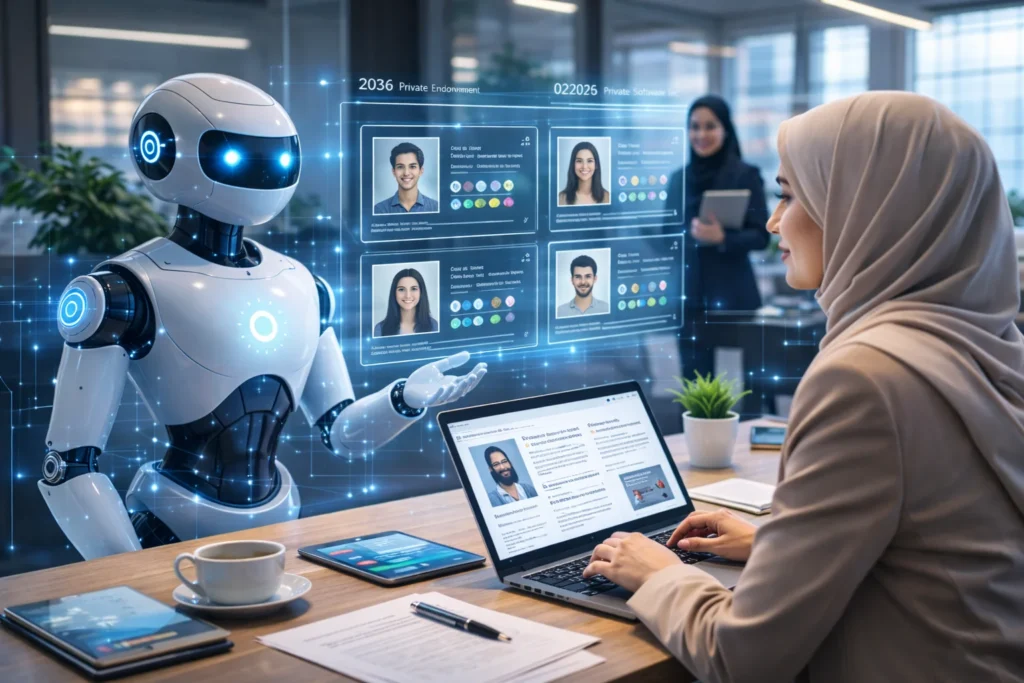
In today’s competitive job market, finding and hiring top talent has become a complex, time-consuming challenge for organizations worldwide. Traditional recruitment methods often struggle with inefficiencies, unconscious biases, and scalability issues, leading to missed opportunities and prolonged hiring cycles. Enter AI agents in recruitment—intelligent systems that are fundamentally reshaping how companies attract, screen, and engage candidates. These advanced tools leverage artificial intelligence to automate repetitive tasks, enhance decision-making, and create more personalized candidate experiences. As we move into 2026, the adoption of AI agents is no longer a futuristic concept but a strategic necessity for businesses aiming to stay ahead in the talent war. This article explores how AI agents are transforming recruitment, their key applications, benefits, and practical steps for implementation, helping you harness their power to build a more efficient and equitable hiring process.
⚡ Quick Answer
AI agents in recruitment are intelligent systems that automate and enhance talent acquisition processes, such as resume screening, candidate engagement, and interview scheduling. They use AI to reduce bias, improve efficiency, and personalize interactions, transforming how companies hire in 2026. Key benefits include faster hiring cycles, better candidate matching, and cost savings, making them essential for modern HR strategies.
What Are AI Agents in Recruitment?
AI agents in recruitment refer to autonomous or semi-autonomous software systems powered by artificial intelligence that perform specific tasks within the talent acquisition process. Unlike basic AI tools that might only analyze resumes, these agents are designed to operate with a degree of independence, learning from data and interactions to optimize outcomes over time. They integrate technologies like natural language processing (NLP), machine learning, and predictive analytics to handle functions ranging from initial candidate sourcing to final offer management. For example, an AI agent might automatically screen hundreds of applications, rank candidates based on job fit, and even schedule interviews without human intervention. This represents a significant evolution from traditional recruitment software, offering more dynamic and adaptive capabilities. As businesses seek to streamline operations, understanding the role of AI agents vs agentic AI can help clarify how these tools differ from broader AI frameworks in their focused, task-oriented approach.
Key Applications of AI Agents in Hiring
AI agents are being deployed across various stages of the recruitment lifecycle, each addressing specific pain points to enhance overall efficiency. Here are the primary applications transforming talent acquisition:
- Resume Screening and Candidate Matching: AI agents analyze resumes and profiles to identify top candidates based on skills, experience, and cultural fit, reducing manual review time by up to 80%.
- Automated Candidate Engagement: These agents use chatbots and messaging systems to interact with candidates, answer queries, provide updates, and maintain communication throughout the hiring process.
- Interview Scheduling and Coordination: By integrating with calendars, AI agents automate scheduling, send reminders, and handle rescheduling requests, minimizing administrative overhead.
- Bias Reduction and Diversity Enhancement: AI agents are programmed to ignore demographic information and focus on merit-based criteria, helping to promote fairer hiring practices and increase workforce diversity.
- Predictive Analytics for Hiring Success: Leveraging historical data, AI agents predict candidate performance and retention likelihood, enabling more informed hiring decisions.
These applications not only speed up processes but also improve accuracy and candidate experience. For instance, in fintech sectors where talent is highly competitive, fintech SEO strategies can be complemented by AI agents to attract and vet candidates more effectively, ensuring a seamless integration of recruitment and broader business goals.
Benefits of Using AI Agents in Talent Acquisition
Implementing AI agents in recruitment offers numerous advantages that directly impact organizational performance and candidate satisfaction. Below is a table comparing key benefits:
| Benefit | Description | Impact |
|---|---|---|
| Increased Efficiency | Automates repetitive tasks like screening and scheduling | Reduces hiring time by 30-50% |
| Improved Candidate Quality | Uses data-driven matching to identify best fits | Enhances hire retention rates |
| Cost Savings | Lowers administrative costs and reduces time-to-fill | Can save thousands per hire |
| Enhanced Candidate Experience | Provides timely responses and personalized interactions | Boosts employer brand and application rates |
| Bias Mitigation | Focuses on objective criteria to reduce unconscious bias | Promotes diversity and compliance |
These benefits make AI agents a valuable investment for companies of all sizes. For example, in cloud security roles, where expertise is critical, cloud security automation tools can be paired with AI recruitment agents to quickly find qualified professionals, ensuring robust protection without delays.
How to Implement AI Agents in Your Recruitment Process
Successfully integrating AI agents into recruitment requires a strategic approach to ensure alignment with business goals and ethical standards. Follow these steps to get started:
- Assess Your Needs: Identify pain points in your current hiring process, such as slow screening or high dropout rates, to determine where AI agents can add the most value.
- Choose the Right Tools: Select AI agent platforms that offer features matching your needs, such as NLP for resume analysis or chatbot capabilities for engagement.
- Train Your Team: Educate HR staff on how to use AI agents effectively, emphasizing collaboration rather than replacement to foster adoption.
- Ensure Data Privacy and Compliance: Implement measures to protect candidate data and adhere to regulations like GDPR, building trust and avoiding legal issues.
- Monitor and Optimize: Regularly review AI agent performance using metrics like time-to-hire and candidate satisfaction, making adjustments as needed.
By following these steps, organizations can smoothly transition to AI-enhanced recruitment. For businesses developing custom solutions, AI agent development services provide expert guidance to tailor tools to specific requirements, ensuring optimal outcomes.
Challenges and Ethical Considerations
While AI agents offer significant benefits, their adoption is not without challenges. Addressing these issues is crucial for responsible implementation:
- Data Bias and Fairness: If trained on biased historical data, AI agents may perpetuate discrimination, requiring ongoing audits and diverse datasets.
- Transparency and Explainability: Candidates and employers may struggle to understand AI decisions, necessitating clear communication about how agents operate.
- Job Displacement Concerns: Some fear AI agents could replace human recruiters, but in reality, they often augment roles by handling mundane tasks.
- Technical Integration Hurdles: Integrating AI agents with existing HR systems can be complex, requiring IT support and compatibility checks.
- Regulatory Compliance: Laws around AI use in hiring are evolving, so staying updated on regulations is essential to avoid penalties.
Proactively managing these challenges helps maximize the positive impact of AI agents. For instance, in sectors like real estate, where AI’s role in replacing agents is debated, similar ethical considerations apply, highlighting the need for balanced AI integration across industries.
Future Trends in AI Recruitment Agents
As technology advances, AI agents in recruitment are poised to become even more sophisticated, driving further transformation in talent acquisition. Key trends to watch include:
- Hyper-Personalization: AI agents will use deeper data insights to tailor interactions to individual candidate preferences, enhancing engagement.
- Integration with Broader AI Ecosystems: Recruitment agents will connect with other AI systems, such as agentic AI apps, for seamless workflow automation across departments.
- Enhanced Predictive Capabilities: Improved algorithms will offer more accurate forecasts of candidate success and team fit, reducing hiring risks.
- Greater Focus on Soft Skills Assessment: AI agents will evolve to evaluate interpersonal and emotional intelligence through advanced analysis of interviews and interactions.
- Ethical AI Frameworks: Increased emphasis on developing standards for fairness and transparency, ensuring AI agents align with societal values.
These trends suggest that AI agents will continue to redefine recruitment, making it more efficient and human-centric. For businesses preparing for the future, leveraging tools like a cloud security checklist can ensure that AI implementations are secure, supporting sustainable growth.
FAQs: People Also Ask About AI Agents in Recruitment
How do AI agents reduce bias in hiring?
AI agents reduce bias by using algorithms that focus on objective criteria like skills and experience, ignoring demographic factors such as age, gender, or ethnicity. They can be trained on diverse datasets and regularly audited to ensure fairness, helping organizations make more equitable hiring decisions.
Can AI agents replace human recruiters entirely?
No, AI agents are not designed to replace human recruiters but to augment their capabilities. They handle repetitive tasks like screening and scheduling, allowing recruiters to focus on strategic activities like relationship-building and final decision-making, creating a more efficient partnership.
What are the costs associated with implementing AI agents in recruitment?
Costs vary based on factors like platform choice, customization needs, and scale. Initial investments may include software licenses, integration fees, and training, but these are often offset by long-term savings from reduced hiring times and improved candidate quality.
How secure is candidate data with AI agents?
Candidate data security depends on the AI agent provider and organizational measures. Reputable platforms use encryption, access controls, and compliance with data protection laws. It’s crucial to choose vendors with strong security protocols and conduct regular audits.
What industries benefit most from AI agents in recruitment?
Industries with high-volume hiring, such as technology, healthcare, and retail, benefit significantly from AI agents due to their efficiency gains. However, any sector facing talent shortages or seeking to improve diversity can leverage these tools effectively.
How can small businesses implement AI agents affordably?
Small businesses can start with affordable, cloud-based AI agent solutions that offer pay-as-you-go pricing or basic packages. Focusing on specific use cases, like automated screening, and using free trials can help minimize costs while testing effectiveness.
What metrics should I track to measure AI agent success?
Key metrics include time-to-hire, cost-per-hire, candidate satisfaction scores, diversity rates, and quality-of-hire (e.g., retention and performance). Tracking these over time helps assess ROI and identify areas for improvement.
Are AI agents compliant with hiring regulations?
AI agents can be compliant if designed and used according to regulations like the EEOC guidelines or GDPR. It’s essential to work with providers that prioritize compliance and stay updated on legal changes to avoid risks.