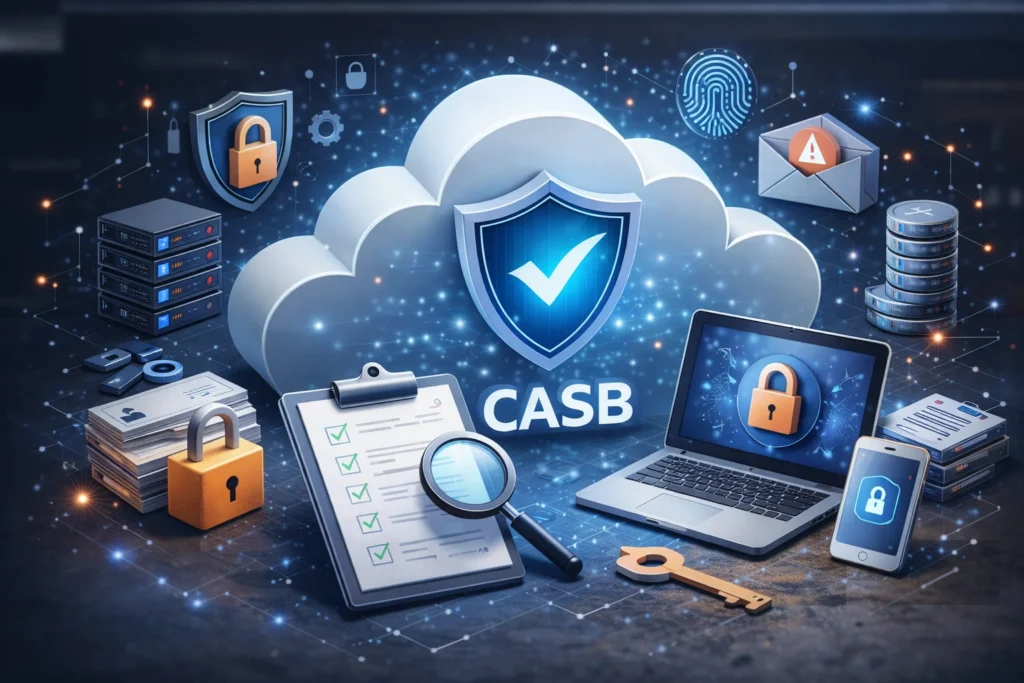
As businesses increasingly migrate to the cloud, securing data and applications has become a top priority. Enter CASB (Cloud Access Security Broker), a critical security solution that acts as a gatekeeper between users and cloud services. This guide will explain everything you need to know about CASB, from its core functions to implementation strategies, helping you protect your organization in today’s digital landscape. For more on cloud security, check out our cloud security checklist.
⚡ Quick Answer
A CASB (Cloud Access Security Broker) is a security tool that monitors and controls access to cloud services, ensuring data protection, compliance, and threat prevention. It sits between users and cloud providers to enforce security policies, detect anomalies, and safeguard sensitive information across platforms like SaaS, IaaS, and PaaS.
What Is a CASB (Cloud Access Security Broker)?
A CASB, or Cloud Access Security Broker, is a software or hardware solution that provides visibility, compliance, data security, and threat protection for cloud applications. It acts as an intermediary, enforcing security policies as data moves between on-premises infrastructure and cloud platforms. With the rise of remote work and multi-cloud environments, CASBs have become essential for mitigating risks associated with shadow IT and unauthorized access.
How Does a CASB Work?
CASBs operate using four key pillars: visibility, compliance, data security, and threat protection. They integrate with cloud services through APIs, proxies, or agents to monitor user activity, encrypt data, and detect malicious behavior. By analyzing traffic in real-time, CASBs can block unauthorized access, prevent data leaks, and ensure adherence to regulations like GDPR and HIPAA. For a deeper dive into compliance, refer to our cloud compliance checklist.
- Visibility: Tracks all cloud usage, including sanctioned and unsanctioned apps.
- Compliance: Ensures cloud activities meet regulatory standards.
- Data Security: Encrypts data and controls access to sensitive information.
- Threat Protection: Detects and mitigates cyber threats like malware and insider attacks.
Key Features of CASB Solutions
Modern CASB vendors offer a range of features designed to address cloud security challenges. These include data loss prevention (DLP), access control, encryption, and anomaly detection. By leveraging these tools, organizations can reduce risks and improve their security posture. When selecting a CASB, consider features that align with your business needs, such as integration capabilities and scalability.
- Data Loss Prevention (DLP): Monitors and prevents unauthorized data transfers.
- Access Control: Enforces policies based on user roles and device context.
- Encryption: Secures data at rest and in transit.
- Anomaly Detection: Identifies suspicious activities using machine learning.
- Compliance Reporting: Generates audits for regulatory requirements.
Top CASB Vendors in 2026
Choosing the right CASB vendor is crucial for effective cloud security. The market includes leaders like Microsoft, Palo Alto Networks, and Cisco, each offering unique strengths. Below is a comparison of top CASB vendors to help you make an informed decision. For insights into other security tools, explore our top fintech apps.
| Vendor | Key Features | Best For |
|---|---|---|
| Microsoft Cloud App Security | Deep integration with Azure, DLP, threat detection | Microsoft-centric environments |
| Palo Alto Networks Prisma Access | Zero-trust security, SD-WAN integration | Large enterprises |
| Cisco Cloudlock | API-based visibility, compliance automation | Multi-cloud deployments |
| Netskope | Real-time analytics, cloud-native architecture | High-performance needs |
| Forcepoint CASB | Behavioral analytics, data-centric protection | Data-sensitive industries |
Benefits of Implementing a CASB
Implementing a CASB offers numerous benefits, from enhanced security to cost savings. By providing centralized control over cloud access, organizations can prevent data breaches, reduce compliance fines, and improve operational efficiency. CASBs also support a zero-trust model, ensuring that only authorized users and devices access sensitive resources. Learn more about security strategies in our AI applications guide.
- Improved Security Posture: Reduces risks from shadow IT and unauthorized apps.
- Regulatory Compliance: Helps meet standards like GDPR, HIPAA, and PCI DSS.
- Cost Efficiency: Optimizes cloud spending by identifying unused services.
- Enhanced Visibility: Provides insights into all cloud activities across the organization.
- Threat Mitigation: Proactively detects and responds to cyber threats.
How to Choose the Right CASB for Your Business
Selecting a CASB requires careful evaluation of your organization’s needs. Start by assessing your cloud environment, security requirements, and budget. Consider factors like deployment models (API vs. proxy), integration with existing tools, and vendor support. It’s also important to test solutions through trials or demos to ensure they meet your expectations. For guidance on technology decisions, visit our about us page.
- Assess Your Cloud Usage: Identify all cloud services and data flows.
- Define Security Goals: Determine priorities like DLP or compliance.
- Evaluate Deployment Options: Choose between API, proxy, or hybrid models.
- Check Integration Capabilities: Ensure compatibility with current infrastructure.
- Review Vendor Reputation: Look for proven track records and customer reviews.
CASB Implementation Best Practices
Successful CASB implementation involves planning, testing, and ongoing management. Begin with a pilot program to identify potential issues, then gradually roll out the solution across your organization. Regularly update policies, train employees, and monitor performance to adapt to evolving threats. By following best practices, you can maximize the value of your CASB investment and maintain robust cloud security.
FAQ: People Also Ask About CASB
What is the main purpose of a CASB?
The main purpose of a CASB is to secure cloud access by enforcing security policies, protecting data, and ensuring compliance across cloud services like SaaS, IaaS, and PaaS.
How does a CASB differ from a firewall?
While firewalls protect network perimeters, CASBs focus specifically on cloud applications, providing granular control, data security, and compliance features tailored to cloud environments.
What are the deployment models for CASB?
CASBs can be deployed via API (for visibility and control), proxy (for real-time traffic inspection), or a hybrid approach combining both methods for comprehensive coverage.
Is a CASB necessary for small businesses?
Yes, small businesses can benefit from CASBs to protect sensitive data, especially if they use cloud services, as they help prevent breaches and ensure compliance affordably.
How do CASBs handle data encryption?
CASBs encrypt data both in transit and at rest using standards like AES-256, ensuring that sensitive information remains secure even if intercepted or accessed unauthorizedly.
Can CASBs detect insider threats?
Yes, CASBs use behavioral analytics and anomaly detection to identify suspicious activities by insiders, such as unusual data access or transfers, and alert administrators.
What is the cost of implementing a CASB?
Costs vary based on features, deployment size, and vendor, typically ranging from a few thousand to tens of thousands of dollars annually, with scalable pricing options.
How do I evaluate CASB vendors?
Evaluate vendors by testing features, checking integration capabilities, reviewing customer feedback, and considering support services to find the best fit for your needs.