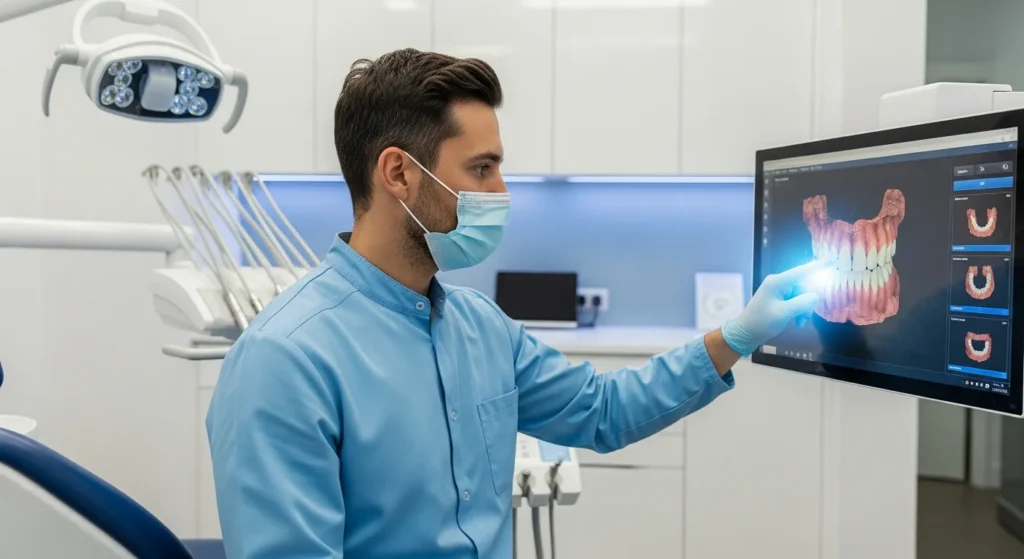
The Evolution of Modern Dental Care in Your Neighborhood
When a patient begins searching for dental technology near me, he is often looking for more than just a routine cleaning. In 2026, the landscape of oral healthcare has shifted dramatically toward precision, speed, and comfort. A modern practitioner understands that his equipment is just as vital as his clinical skill. By integrating high-tech tools, he can provide more accurate diagnoses and less invasive treatments, ensuring that every individual who walks through his doors receives the highest standard of care.
Finding a clinic that prioritizes these advancements means looking for specific indicators of digital integration. Whether it is a routine checkup or a complex restorative procedure, the right technology allows a doctor to visualize problems long before they become painful emergencies.
Key Innovations Defining High-Tech Dental Clinics
If you are evaluating a local provider, you should look for several core technologies that have become the gold standard in the industry. These tools not only improve outcomes but also significantly reduce the time a patient spends in the chair.
Artificial Intelligence in Diagnostics
AI has revolutionized how a dentist interprets X-rays and scans. Instead of relying solely on the human eye, he now uses AI-driven software to highlight early signs of decay, bone loss, or periodontal disease. This ensures he never misses a subtle detail, allowing for proactive rather than reactive treatment.
3D Printing and Same-Day Restorations
One of the most significant shifts in restorative care is the move away from traditional molds. By understanding what is 3d printing technology and its application in crown fabrication, a patient can appreciate why he no longer has to wait weeks for a laboratory. Modern clinics use intraoral scanners and in-house 3D printers to create crowns, bridges, and even clear aligners on-site.
Cone Beam Computed Tomography (CBCT)
Traditional 2D X-rays provide a limited view. A high-tech office will utilize CBCT to create a three-dimensional image of the patient’s teeth, soft tissues, nerve paths, and bone in a single scan. This is particularly crucial for a surgeon when he is planning dental implant placement or complex extractions.
Why Precision Tech Matters for the Patient Experience
The primary benefit of advanced dental tech is the enhancement of the patient experience. For a man who may feel anxious about dental visits, technology offers a more predictable and comfortable environment. Laser dentistry, for example, allows a practitioner to perform gum treatments or cavity preparations with minimal noise and often without the need for traditional anesthesia.
Furthermore, digital impressions have replaced the messy, uncomfortable putty that many patients used to dread. Today, a technician simply moves a small wand around the mouth, and a perfect digital model appears on the screen instantly. This level of precision is part of the major trends in technology that are reshaping healthcare expectations globally.
How to Verify a Dentist’s Technology Stack
When searching for a new provider, a patient should be diligent in his research. He can start by visiting the clinic’s website to see if they list their equipment. A forward-thinking dentist will often highlight his investment in the latest tools because he knows it sets him apart from traditional practices.
- Check for Digital Scanners: Does he use iTero or similar intraoral scanners?
- Inquire About Lasers: Does he offer Waterlase or Biolase for soft tissue procedures?
- Ask About AI: Does the clinic use diagnostic software to assist in reading radiographs?
- Look for In-House Labs: Can he produce restorations in a single visit?
Frequently Asked Questions
What is the most important dental technology to look for?
While many tools are beneficial, digital 3D imaging (CBCT) and intraoral scanners are fundamental for high-precision care and modern diagnostics.
Does advanced dental technology make treatment more expensive?
While the initial cost of a high-tech visit might be slightly higher, it often saves the patient money in the long run by identifying issues early and reducing the number of required appointments.
Is laser dentistry better than traditional methods?
For many procedures, yes. It is typically less invasive, causes less bleeding, and results in a faster recovery time for the patient.
How do I know if a dentist near me uses AI?
A patient can ask his dentist if he uses computer-aided diagnostic software. Many modern offices are proud to discuss how they use AI to ensure accuracy in their treatment planning.