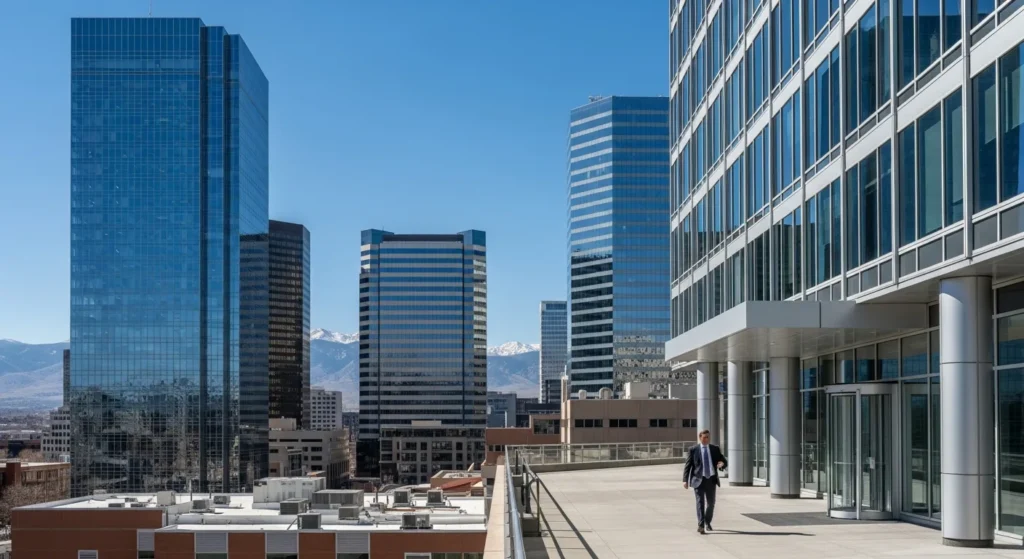
The Strategic Evolution of the Denver Tech Center
The Denver Tech Center (DTC) has long transcended its origins as a mere collection of office buildings. In 2026, it stands as a sophisticated ecosystem that rivals the most prominent innovation corridors in the world. Located in the southeastern portion of the Denver metropolitan area, the DTC serves as the economic engine of Colorado, blending high-density corporate headquarters with a lifestyle-oriented urban design.
For the modern professional, the DTC offers a unique value proposition. He finds himself at the intersection of technological advancement and environmental sustainability. The district has moved beyond traditional cubicle farms, embracing open-concept campuses and smart-city infrastructure that prioritize efficiency and connectivity. This evolution matches the global trends seen in the evolving landscape of urban innovation centers, where proximity to talent and resources is paramount.
A Hub for Enterprise and Innovation
The DTC is home to a staggering concentration of Fortune 500 companies and high-growth startups. In 2026, the sector focus has shifted toward aerospace, renewable energy, and specialized financial services. These organizations rely heavily on the integration of sophisticated enterprise solutions to maintain their edge in an increasingly competitive global market.
Key industries represented in the Denver Tech Center include:
- Telecommunications: A legacy industry for the region that continues to innovate in 6G and satellite communications.
- Fintech: Financial service providers have established massive operations here, leveraging Colorado’s favorable business climate.
- Cybersecurity: With the rise of digital threats, the DTC has become a fortress for data protection firms.
- Healthtech: Merging Colorado’s wellness culture with advanced data analytics.
Connectivity and Infrastructure in 2026
One of the primary reasons a business leader chooses the DTC is the unparalleled infrastructure. The district is perfectly positioned along the I-25 corridor, providing seamless access to both downtown Denver and the Colorado Springs market. However, the real story in 2026 is the expansion of the RTD Light Rail system, which allows a commuter to reach the tech center without the need for a personal vehicle.
The “last mile” problem has been solved through autonomous shuttle loops and integrated bike-sharing programs. When an executive plans his morning, he can rely on a multi-modal transport system that is both punctual and eco-friendly. This accessibility ensures that the talent pool remains wide, drawing in the best minds from across the Front Range.
The Professional Lifestyle: Living and Working in DTC
The DTC is no longer a place that empties out at 5:00 PM. The rise of mixed-use developments has created a vibrant “live-work-play” environment. High-end residential towers, luxury retail, and chef-driven restaurants have transformed the area into a self-sustaining community.
A professional living in the DTC enjoys a high quality of life. He has access to miles of paved trails, such as the Cherry Creek Trail, which offers a direct route for his morning run or cycling commute. The emphasis on wellness is visible in the architecture, with many buildings featuring rooftop gardens, advanced air filtration systems, and ample natural lighting. This holistic approach to the workspace ensures that he remains productive and motivated throughout the week.
The Future Outlook for the Southeast Corridor
As we look toward the latter half of the decade, the Denver Tech Center is poised for even deeper integration with emerging technologies. Plans are already underway for enhanced AI-driven traffic management and a significant expansion of green spaces. The DTC remains a testament to what is possible when private enterprise and thoughtful urban planning work in tandem. For any stakeholder looking to plant roots in a stable yet dynamic market, the Denver Tech Center remains the definitive choice in 2026.
Frequently Asked Questions
What major companies are located in the Denver Tech Center?
The DTC hosts a variety of major corporations, including Western Union, Zoom Video Communications, and several large-scale operations for companies like Oracle and Comcast. It is a primary hub for telecommunications and financial technology firms.
Is the Denver Tech Center a good place to live for professionals?
Yes, the area has seen a massive increase in luxury apartments and mixed-use developments. It offers a shorter commute for those working in the district and provides easy access to light rail, dining, and outdoor recreation.
How far is the Denver Tech Center from Denver International Airport (DIA)?
The DTC is approximately 25 to 30 miles from DIA. Most professionals can make the drive in about 35-45 minutes depending on traffic, or they can utilize the light rail system with a transfer at Union Station or use specialized shuttle services.
Is the Denver Tech Center considered a city?
Technically, the Denver Tech Center is a business park and neighborhood that spans across portions of Denver and Greenwood Village. It is not its own incorporated city, though it functions as a distinct urban core.