The Unmatched Legacy of Early 2000s Computer Games
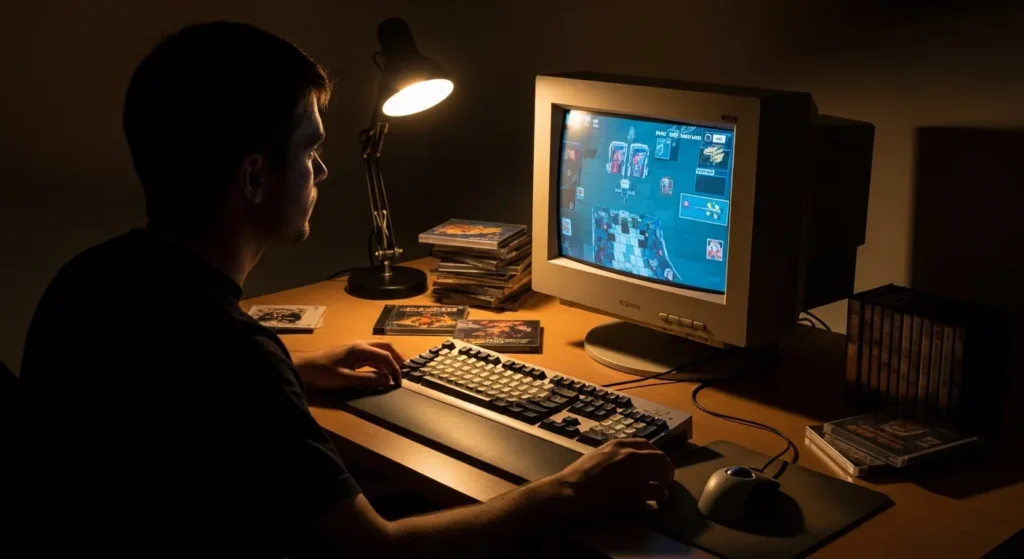
The dawn of the new millennium brought with it a seismic shift in how a player interacted with his machine. This era, often referred to as the ‘Golden Age’ of PC gaming, wasn’t just about better graphics; it was about the birth of genres and the refinement of mechanics that still dominate the industry today. When a gamer sat down in front of his beige CRT monitor in 2002, he wasn’t just playing a game; he was witnessing the evolution of digital storytelling.
Early 2000s computer games benefited from a perfect storm of hardware accessibility and creative risk-taking. Developers were no longer limited by the extreme constraints of the 90s, yet they hadn’t yet entered the era of hyper-commercialized ‘live service’ models. This resulted in titles that felt complete, polished, and deeply immersive.
The RTS Boom: Strategy and Command
If there is one genre that defined the early 2000s, it was the Real-Time Strategy (RTS) game. Titles like Warcraft III: Reign of Chaos and Age of Empires II: The Conquerors were staples on every hard drive. In these games, a commander had to manage his resources, build his base, and lead his armies with precision. The depth of strategy required meant a player could spend hundreds of hours mastering a single faction.
For those looking to dive deeper into the technical specifications and historical context of that era, reviewing all computer resources can provide a clearer picture of how far hardware has evolved since the days of Pentium 4 processors and early dedicated GPUs.
The Rise of Immersive RPGs and Life Sims
The early 2000s also saw the RPG genre move from isometric viewpoints into fully realized 3D worlds. The Elder Scrolls III: Morrowind offered a level of freedom that was previously unthinkable. A player could ignore the main quest entirely and simply live his life in the province of Vvardenfell, joining guilds or practicing his alchemy skills.
Simultaneously, the world was introduced to The Sims. While modern gamers might look for custom content for life simulation titles today, the original game released in 2000 set the foundation for the entire genre. It allowed a user to control every aspect of a character’s daily routine, from his career choices to his home decor, creating a digital dollhouse that appealed to millions.
FPS Revolution: Half-Life 2 and Halo
First-person shooters underwent a massive transformation during this period. Half-Life 2, released in 2004, introduced physics-based gameplay that changed everything. A player could pick up almost any object in the environment and use it as a weapon or a tool to solve puzzles. This level of interaction made the world feel alive and reactive to his actions.
On the multiplayer front, the early 2000s were the heyday of the LAN party. Friends would lug their heavy towers to a single basement, connect them via Ethernet cables, and spend the entire weekend in Counter-Strike or Unreal Tournament 2004. It was a social experience that defined the childhood of many men growing up at the time.
Hardware and the Windows XP Era
The stability of Windows XP played a massive role in the success of early 2000s computer games. Before XP, gaming on Windows was often a precarious balancing act of drivers and DOS prompts. With the new OS, a developer could focus more on the game itself and less on making it run. This era also saw the rise of Steam, which, despite a rocky start, eventually revolutionized how a man purchased and managed his digital library.
Frequently Asked Questions
Can I play early 2000s computer games on Windows 11?
Yes, many classic titles are available through digital storefronts like GOG and Steam, which often include compatibility patches. For physical copies, a player may need to use tools like DGVoodoo2 or virtual machines to get them running correctly on modern hardware.
Why were expansion packs so common back then?
Before the era of small DLC and microtransactions, developers released large expansion packs. These were essentially ‘half-sequels’ that added significant new content, such as new campaigns, units, or mechanics, providing a player with more value for his money.
What was the most popular PC game of 2004?
2004 is widely considered one of the best years in gaming history. While Half-Life 2 and World of Warcraft were the heavy hitters, titles like Doom 3 and Far Cry also pushed the boundaries of what was possible on a home computer.
Are LAN parties still a thing?
While high-speed internet has made online play the norm, some enthusiasts still host LAN parties for the nostalgia and the unique social atmosphere. It allows a gamer to compete directly with his friends in the same room, just like he did twenty years ago.