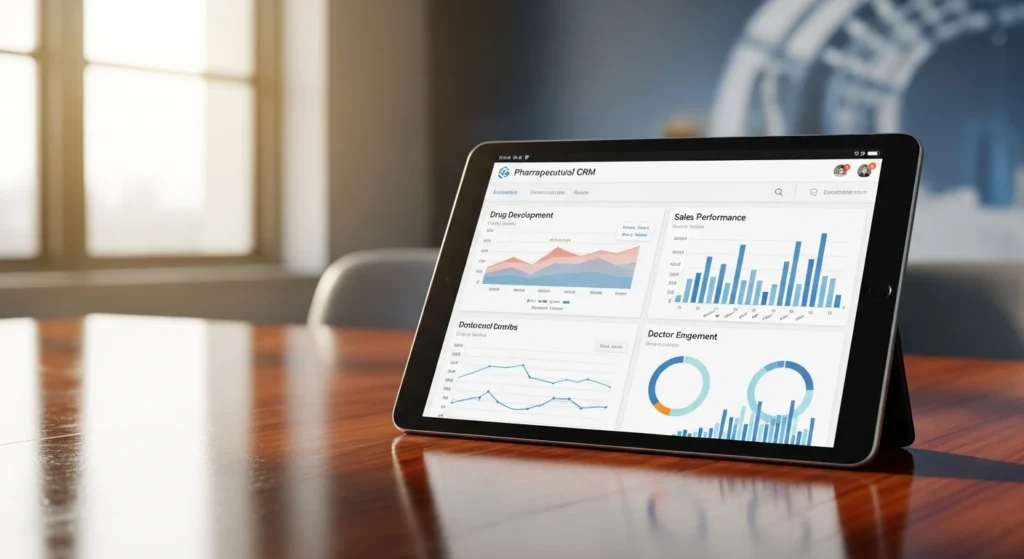
In the fast-paced world of pharmaceuticals, customer relationship management (CRM) tools are no longer just about tracking sales—they’re becoming intelligent hubs that drive compliance, enhance patient outcomes, and streamline operations. As enterprise tech advances, pharma CRM tools are poised for a transformative shift, integrating artificial intelligence, real-time data analytics, and regulatory safeguards. This evolution is critical for companies navigating complex healthcare landscapes, where precision and efficiency can mean the difference between success and failure. In this article, we’ll dive into the key trends shaping the future of pharma CRM tools, from AI-driven insights to enhanced security measures, and explore how these innovations will redefine the industry by 2026.
The future of pharma CRM tools involves AI integration, enhanced compliance features, real-time data analytics, and improved patient engagement, making them essential for enterprise tech in 2026 to boost efficiency and regulatory adherence.
Key Trends Shaping Pharma CRM Tools in 2026
As enterprise tech evolves, pharma CRM tools are adopting several groundbreaking trends. First, artificial intelligence (AI) is becoming central, enabling predictive analytics for sales forecasting and personalized marketing. For instance, AI can analyze physician prescribing patterns to optimize outreach, similar to how CRM for mobile enhances accessibility on-the-go. Second, compliance and regulatory features are being embedded directly into CRM systems, automating audits and reducing human error—a crucial aspect in highly regulated industries. Third, real-time data integration allows for seamless collaboration across departments, from R&D to marketing, ensuring that all teams work with the latest information. These trends are not just incremental updates; they represent a fundamental shift toward more agile and intelligent pharma CRM tools.
- AI and machine learning for predictive insights
- Enhanced compliance automation
- Real-time data synchronization
- Cloud-based scalability
- Integration with IoT devices
Benefits of Advanced Pharma CRM Tools for Enterprise Tech
Implementing next-generation pharma CRM tools offers numerous benefits for enterprise tech strategies. Improved efficiency is a top advantage, as automated workflows reduce manual tasks and free up staff for higher-value activities. For example, tools that streamline payment processes can enhance operational speed, much like Raiser EDI payment solutions in fintech. Enhanced compliance reduces legal risks and fines, ensuring that companies adhere to strict regulations like HIPAA and GDPR. Better patient engagement leads to improved health outcomes, as CRM systems can track patient interactions and personalize communication. Additionally, data-driven decision-making becomes more accurate, helping companies allocate resources effectively and drive growth. These benefits make advanced CRM tools a cornerstone of modern pharmaceutical operations.
- Boost operational efficiency by 30-40%
- Reduce compliance violations by up to 50%
- Enhance patient satisfaction scores
- Increase sales productivity through targeted insights
- Lower IT costs with cloud-based solutions
Comparison of Traditional vs. Future Pharma CRM Tools
To understand the evolution, it’s helpful to compare traditional pharma CRM tools with their future counterparts. Traditional systems often rely on manual data entry and siloed information, leading to inefficiencies and errors. In contrast, future tools leverage AI and cloud tech for automation and real-time updates. The table below highlights key differences:
| Aspect | Traditional CRM Tools | Future CRM Tools (2026) |
|---|---|---|
| Data Processing | Manual entry, batch updates | AI-driven, real-time analytics |
| Compliance | Reactive checks, high risk | Proactive automation, embedded safeguards |
| Integration | Limited, often siloed | Seamless with ERP and other systems |
| Scalability | On-premise, costly upgrades | Cloud-based, flexible scaling |
| User Experience | Complex interfaces | Intuitive, mobile-friendly designs |
This shift mirrors broader trends in enterprise tech, where tools like ERP games are revolutionizing training and engagement. By adopting future-oriented CRM solutions, pharma companies can stay competitive and responsive to market changes.
Challenges in Adopting Future Pharma CRM Tools
Despite the advantages, transitioning to advanced pharma CRM tools presents challenges. High implementation costs can be a barrier, especially for smaller firms, as new systems often require significant upfront investment in tech infrastructure. Data security concerns are paramount, given the sensitive nature of healthcare information; breaches could lead to severe reputational and legal damage. Resistance to change among staff is another hurdle, as employees may be accustomed to legacy systems and reluctant to learn new workflows. Additionally, integration with existing systems, such as electronic health records (EHRs), can be complex and time-consuming. Addressing these challenges requires careful planning, robust training programs, and partnerships with reliable vendors to ensure a smooth transition in the enterprise tech landscape.
- High initial investment and ROI uncertainty
- Data privacy and regulatory compliance risks
- Employee training and adoption barriers
- Technical integration complexities
- Ongoing maintenance and update costs
How AI is Revolutionizing Pharma CRM Tools
Artificial intelligence is at the forefront of transforming pharma CRM tools, making them smarter and more efficient. AI algorithms can analyze vast datasets to predict sales trends, identify high-value physicians, and personalize marketing campaigns, much like how AI goal generators optimize business strategies. Natural language processing (NLP) enables CRM systems to understand and categorize customer feedback from emails or social media, improving response times and satisfaction. Machine learning models can also detect anomalies in compliance data, flagging potential issues before they escalate. This AI-driven approach not only enhances decision-making but also reduces operational costs by automating routine tasks. As enterprise tech continues to evolve, AI will become an indispensable component of pharma CRM, driving innovation and competitive advantage.
- Predictive analytics for sales forecasting
- NLP for customer sentiment analysis
- Automated compliance monitoring
- Personalized engagement recommendations
- Real-time anomaly detection
FAQs About the Future of Pharma CRM Tools
What are the key features of future pharma CRM tools?
Future pharma CRM tools will include AI-driven analytics, real-time data integration, enhanced compliance automation, cloud-based scalability, and mobile accessibility to support agile operations in enterprise tech.
How do pharma CRM tools improve compliance?
They automate regulatory checks, track interactions for audit trails, and embed compliance rules into workflows, reducing human error and ensuring adherence to laws like HIPAA, similar to secure payment systems in fintech.
Are AI-powered CRM tools expensive to implement?
Initial costs can be high, but they often lead to long-term savings through increased efficiency and reduced risks, making them a valuable investment for enterprise tech strategies.
Can small pharma companies benefit from advanced CRM tools?
Yes, cloud-based and scalable solutions make advanced tools accessible to smaller firms, allowing them to compete with larger players by leveraging tech for better customer insights.
How do CRM tools integrate with other enterprise systems?
They use APIs and cloud platforms to seamlessly connect with ERP, EHR, and marketing systems, ensuring data consistency and streamlined operations across departments.
What role does data security play in pharma CRM tools?
Data security is critical, as breaches can compromise patient information; future tools incorporate encryption, access controls, and regular audits to protect sensitive data in enterprise tech environments.
How will pharma CRM tools evolve by 2030?
By 2030, expect greater AI autonomy, blockchain for secure data sharing, and deeper integration with wearable tech for real-time health monitoring, further enhancing their role in enterprise tech.