The Challenge of Manual Inefficiency in 2026
In the current fast-paced digital economy, a business leader cannot afford to waste his team’s potential on repetitive, manual tasks. As enterprises scale, the complexity of internal workflows often grows beyond what a single manager can oversee. This is where an automation finder becomes an essential asset. By utilizing sophisticated algorithms, this tool helps him pinpoint exactly where his resources are being drained and which processes are prime candidates for digital transformation.
What is an Automation Finder?
An automation finder is a diagnostic software solution designed to analyze a company’s digital footprint and identify tasks that can be handled by software robots or AI agents. Instead of him guessing which department needs help, the tool provides data-driven insights. It monitors how he and his employees interact with various applications, mapping out the sequence of events that lead to a completed task.
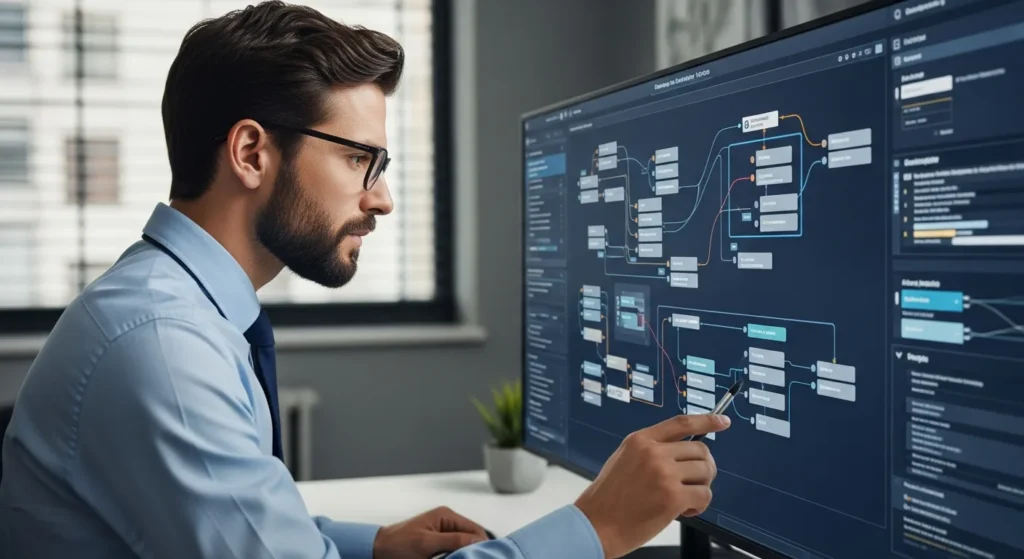
By capturing this data, the automation finder creates a visual representation of the workflow. He can then see the bottlenecks, the redundant steps, and the high-frequency actions that require no human intuition. This allows him to make informed decisions about where to deploy his automation budget for the highest impact.
Key Benefits of Using an Automation Finder
Implementing an automation finder is not just about technology; it is about strategic resource allocation. When a manager understands his operation’s inner workings, he gains a competitive edge. Here are the primary advantages he can expect:
- Data-Driven Prioritization: He no longer has to rely on anecdotal evidence from his staff. The tool shows him exactly how many hours are spent on a specific task.
- Reduced Human Error: By identifying processes that are prone to mistakes due to fatigue, he can automate them to ensure 100% accuracy.
- Scalability: Once he identifies a repeatable process, he can scale it infinitely without increasing his headcount.
When a manager looks at his orchestration of complex workflows, he often misses the micro-tasks that drain productivity. The automation finder shines a light on these hidden inefficiencies.
How the Discovery Process Works
Step 1: Data Collection
The tool sits quietly in the background, observing the digital movements of the user. It records clicks, data entries, and application switches. He can rest assured that modern tools are designed with privacy in mind, focusing on the process rather than the individual.
Step 2: Analysis and Mapping
After a period of observation, the automation finder uses machine learning to group similar actions. It identifies a pattern—for example, every time he receives an invoice, he opens a specific spreadsheet and then copies data into an ERP system. The tool recognizes this as a “candidate for automation.”
Step 3: ROI Calculation
The most valuable feature for any executive is the ROI projection. The tool calculates how much money he will save by automating the discovered process. It compares the cost of the automation bot against the hourly rate of the human worker currently performing the task.
The Role of AI in Modern Process Discovery
In 2026, automation finders have evolved beyond simple screen recording. They now incorporate generative AI to suggest the best way to build the automation. If he finds a process that is fragmented across multiple legacy systems, the AI can propose a bridge solution. In modern environments, an automation finder works alongside a comprehensive cloud security automation strategy to ensure that data remains protected while efficiency increases.
Choosing the Right Automation Finder for His Business
Not all discovery tools are created equal. A CTO or IT director must evaluate several factors before choosing a platform. He should look for a tool that offers seamless integration with his existing tech stack. Furthermore, he must ensure the tool provides clear, actionable reports rather than just raw data. A good automation finder should tell him not just what can be automated, but how it will benefit his bottom line.
Frequently Asked Questions
What is the difference between an automation finder and task mining?
While task mining is a broad term for analyzing user actions, an automation finder is specifically geared toward identifying the feasibility and ROI of automating those tasks. It acts as the bridge between discovery and implementation for the business leader.
Can an automation finder reduce operational costs?
Yes, significantly. By identifying and eliminating manual bottlenecks, he can redirect his human capital toward high-value creative and strategic tasks, effectively lowering the cost per transaction across his organization.
Is it difficult for a manager to set up these tools?
Most modern automation finders are designed for ease of use. He can typically deploy them with minimal IT intervention, allowing the software to begin gathering insights within hours of installation.